

The search landscape has undergone a seismic shift over the past 24 months. Generative AI in search is no longer a future concept; it’s the new reality. From the introduction of AI Overviews to the continued rise of zero-click searches, traditional SEO tactics alone no longer guarantee visibility or traffic. The core question for every brand is how to adapt to Google’s algorithm updates in 2025.
This updated guide (originally written on September 27, 2018) explores what’s working now, what to monitor, and provides actionable SEO tips for B2B marketers dealing with traffic drops in this more complex and dynamic search ecosystem.
The New SERP: Understanding AI Overviews and SGE’s Impact
The most significant change to the Search Engine Results Pages (SERPs) is their new structure. Prime real estate is now dominated by AI Overviews (formerly Search Generative Experience or SGE), which synthesize content from multiple sources to answer queries directly on the results page.
You may ask, “What is an AI Overview in Google search?”. It’s an AI-generated summary that appears at the top of the SERP, aiming to provide a direct, comprehensive answer to a user’s query. This fuels the rise of “zero-click searches,” where users get their answer without ever leaving Google. Recent industry estimates project this could reduce traditional click-through volume by as much as 15% to 25%—a direct challenge for those who rely on organic discovery.
For B2B marketers and SaaS leaders, how Google’s SGE is changing content strategy is the central issue. Ranking #1 is no longer the only goal; the new benchmark is achieving visibility within these dynamic SERP features. Success now depends on becoming a trusted source that algorithms cite—and that users still want to engage with beyond a summary.
This is why SEO isn’t dead—it’s just more strategic. It’s about feeding algorithms high-quality, structured data, mastering user intent matching, and designing experiences that AI can’t easily replicate.
Why Your Google Rankings Dropped and How to Recover
When rankings dip or traffic slows, the first step is to diagnose, not panic. In 2025, performance drops often stem not from penalties, but from your content being referenced without a click in AI summaries or being displaced by competitors with better-structured data.
Here’s your diagnostic and recovery plan:
Monitor Impressions vs. Clicks in Google Search Console
A common pattern indicating you’re being featured in an AI Overview is high impressions coupled with a low click-through rate (CTR). This means your page is being surfaced as a source, but users are getting their needs met by the summary. In Search Console, identify core URLs exhibiting this trend; these are prime candidates for optimization to encourage a click.
Leverage GA4 for Deeper Engagement Insights
Once users do click, are they staying? In GA4, examine key behavior metrics for your organic traffic: scroll depth, engagement time, and conversion rates. High engagement signals your content meets the user’s needs and deserves further optimization. Low engagement may indicate a mismatch in search behavior changes and content value, requiring a rethink of the on-page experience.
Conduct a Modern Technical SEO Audit
Foundational SEO is more critical than ever. Your technical SEO audit must confirm that your site excels in three key areas:
- Crawlability and Indexing: If Google can’t easily find and understand your content, it will never be featured. Ensure your site structure is logical and your robots.txt and sitemaps are clean.
- Core Web Vitals: A poor user experience (slow load times, shifting layouts) will harm your visibility.
- Mobile-First Indexing: With the majority of searches happening on mobile, a seamless mobile experience is non-negotiable.
Winning in the AI Era: Your 2025 Organic Traffic Strategies
Adapting isn’t just about recovery; it’s about building a moat around your digital presence. Here’s how to create a resilient content and SEO strategy.
Embrace Structured Data: Your Key to AI Visibility
This is no longer optional. To get featured, you must learn how to use structured data for SEO in 2025. Using schema markup allows Google to correctly attribute content in AI-powered answers and boosts your eligibility for rich results.
The best schema markup for B2B websites often includes:
- FAQPage: For informational and bottom-of-funnel pages.
- HowTo: For step-by-step guides.
- Review: To showcase social proof and build trust.
- Product: Essential for SaaS and product-led companies.
- VideoObject: To get your video content properly indexed and featured.
We’ve seen the results firsthand. One of our logistics SaaS clients was struggling with low CTR on high-ranking commercial pages. After implementing review and FAQ schema across their core product pages, they saw a 4.5x increase in organic conversions from Google and a 35% lift in non-branded traffic. Schema didn’t just get them seen; it got them clicked and trusted.
The takeaway? Schema isn’t just a technical checkbox—it’s a strategic lever for ROI in a world of generative AI in search.
Create Content That Earns Clicks
Getting featured is only half the battle. You need to create content that provides undeniable value beyond a simple answer. The content types that still earn clicks in zero-click search are those that compel a user to go deeper.
Focus on assets like:
- In-depth, downloadable guides and original research reports.
- Insightful videos and webinars that showcase expertise.
- Interactive tools and calculators that solve a user’s problem.
- Comprehensive customer reviews and case studies.
The goal is to answer the initial query but hint at a much deeper value proposition—one that can only be unlocked by engaging with your full content experience. Prioritizing content freshness by regularly updating these core assets signals ongoing relevance to Google.
Reinforce Your E-E-A-T Signals
Experience, Expertise, Authoritativeness, and Trust (E-E-A-T) are at the heart of both ranking and how to get featured in Google’s AI summaries. Reinforce your signals by:
- Assigning clear authorship with author bios and credentials.
- Citing third-party publications and data.
- Publishing client stories and case-based insights that demonstrate real-world experience.
- Focusing on high-intent keywords (transactional and bottom-of-funnel queries) that AI summaries struggle to fully satisfy.
Prioritize High-Intent Keywords
Focus on transactional and bottom-of-funnel queries that AI summaries struggle to answer in full. These keywords are less cannibalized by AI and more aligned with visitors ready to convert. Long-tail search terms that reflect buying intent, pain points, or comparison needs are especially valuable in B2B SEO.
The Strategic Shift: Don’t Just Compete—Outplay
As AI becomes the default interface for information, content that merely informs will fade into the background. To sustain meaningful visibility in digital marketing for SaaS, your content must perform like a product—designed to inform, engage, convert, and support algorithmic indexing all at once.
The good news? These changes reward brands that think long-term. B2B leaders who adapt now by implementing structured SEO, focusing on high-value content, and aligning their websites with modern SERP behavior will be in a stronger position than ever before.
It’s every business owner’s dream to be ranked on the first page of Google or even in the #1 spot. In the digital age, if your business doesn’t appear on Google, a large percentage of consumers won’t even know you exist. As the top search engine in the world, Google and its search algorithms have the power to make or break your business. This is why it’s critical to stay up-to-date with every update and change that Google makes to ensure that your business continues to rank and be seen by people searching for products/services like yours.
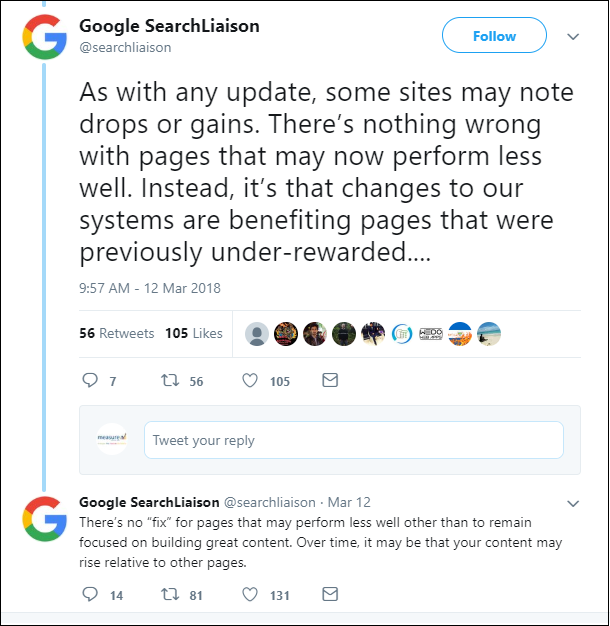
Google recently made a significant change to its core algorithm that recognizes quality content and pages. They announced a global algorithm update in March 2018, which meant that every site would be impacted. This caused concern for some SEO experts, who saw competitors ranking higher while their clients’ content started ranking lower.
It’s important to note that Google addressed the core algorithm change by saying that the update was focused on rewarding pages that weren’t being adequately recognized by their previous algorithm. The reason some pages were ranking lower wasn’t because they were now being seen as poor quality, but because there was now more competition for the top spot. And accordingly, poor-quality pages were now ranking lower.
In July 2018, Google announced another algorithm update geared towards measuring the speed and responsiveness of mobile websites. Dubbed the Google Speed Update, it adds a site’s loading speed on mobile as a key ranking factor. As mobile search continues to grow in popularity, it’s critical that consumers can quickly access the information they need when using their smartphone or tablet. The new Google Speed Update will direct mobile searchers towards websites that load quickly on their devices, which highlights the importance of ensuring that your website is responsive and mobile-friendly.
Has Google’s Algorithm Update Affected Your Site’s Rankings? Then Follow These Steps
So what should you do to ensure that your website isn’t negatively impacted by Google’s latest algorithm updates, so you can maintain (or improve!) your rankings?
- Conduct a website audit
If your website has technical issues, such as slow loading times, broken links, or redirect loops, visitors will click away from your site. In a crowded marketplace, consumers demand speedy and efficient websites, and if they can’t quickly find what they’re looking for, they’ll click off your site and visit a competitor. Google recognizes this consumer behaviour and consequently gives preference to sites that work well, have no technical difficulties, and load quickly.
- Learn from Google’s Search Quality Raters Guidelines
Google provides a lengthy and comprehensive guideline to help website owners and SEO experts understand what Google considers quality content. Be forewarned that the guideline is over 160 pages; however, it is worth taking the time to read it. These guidelines will teach you how Google’s Quality Raters identify quality content. If your business has issues with Expertise, Authority, and Trust (E-A-T), Google’s guidelines can also help you.
- Conduct competitor website comparisons & consider how easy your website is to use
As word spreads about Google’s latest changes, your competitors will take all updates just as seriously as you do. Compare your digital presence to your closest competitors and look for areas of improvement. Have a close colleague proofread your web content and analyze your site’s ease of use. Make note of their feedback and consider how you can implement any updates. You may want to hire a new web designer to make your site more conversion friendly and update your site’s content.
- Remove redundant & repetitive content
After Google’s algorithm update, it will be easier for your website to lose its ranking if you don’t take action. Low-quality content will negatively affect your ranking, as your competitors’ content will surpass yours. An easy way to improve your content is to remove repetitive content, as Google will consider it redundant. You can also look at the style and type of content featured on high-ranking websites, and mimic that style for your own content.
- Remove intrusive ads
While online ads are an effective way to boost income, visitors to your site will not appreciate ads that disrupt their user experience. Intrusive ads that play sound, take up the whole screen, pop-up at inopportune times, are too flashy, and perhaps even offensive will make visitors click off your site immediately. If you notice your site features intrusive ads, review your Google Adsense account to block certain ads.
- Continually add fresh content
To maintain or increase your website’s ranking, you must regularly add new and keyword-rich content to your website. However, your new content shouldn’t focus only on SEO; it must be educational and informative to be considered high-quality. Adding media to your content, such as videos, will also help your content rank higher. To master the art of merging SEO with content writing, check out our other blog that explains how to write quality content.
Has Your Google Snippet Changed, Too? Make Sure Your Snippet Encourages Clicks
If you’re unfamiliar with snippets, these are the descriptions that accompany search results and give searchers an idea about the information a website contains.

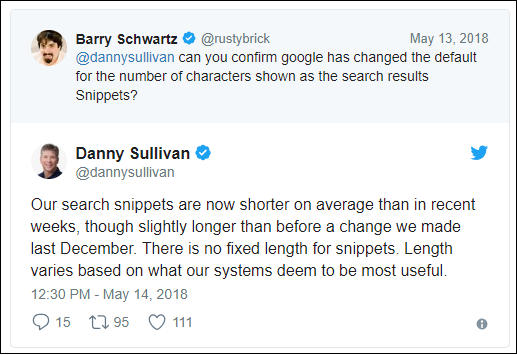
Google has made several changes to its snippet display over the past year (and given marketers a few headaches in the process!). In December 2017, Google increased the character limit of the snippets, only to decrease the average length five months later. While some SEO experts rushed to re-optimize and increase the length of their meta descriptions after the December update, Google now dynamically pulls the snippet text from your website. This means the length will vary, and meta descriptions don’t factor into your site’s snippet on Google.
To counter this and ensure that your site’s snippet entices searchers to click, consider the structure of your SEO content. If your keyword strategy involves stuffing your keywords into lists or chunks of text, rather than sharing information, you won’t have a quality snippet. If you have a poor quality snippet that doesn’t attract clicks, Google will notice that fewer people are clicking on your site compared to a competitor’s site, and this will negatively affect your ranking. However, structuring your content so that your keywords appear organically while providing valuable information will allow Google to pull a quality snippet from your website.
Many websites aim to have a rich or featured snippet, meaning their snippet will display more valuable information and perhaps a thumbnail image. Rich snippets have been shown to improve the click-through rate, which will increase your site’s organic traffic. However, according to recent studies, featured snippets rank in the top 10 on Google for the related keyword. This means that if you want the opportunity to appear as a featured snippet, you need to carefully manage your SEO strategy and consistently create high-quality SEO content that keeps you in the top 10 for your designated keywords.
Need Help Managing Your Site’s SEO Strategy To Keep Up With Google’s Updates?
Google is constantly evolving its search engine to keep up with consumer expectations and to provide better and more efficient search results. While the updates benefit consumers by improving their search experience, it can be hard for businesses to keep up and ensure that their rankings don’t suffer.
To stay up-to-date with Google’s latest updates, you need to work with a digital marketing agency that has a team of SEO experts who make it their job to know Google inside and out. At Measure Marketing, our SEO experts can help you develop local search, paid ads, and content marketing strategies that will increase your keyword rankings and help you get noticed by your target audience. The result? You’ll generate more leads, increase sales, and enjoy greater brand awareness.
What are you waiting for? Contact Measure Marketing today for a complimentary consultation and learn how we can help your business thrive using our innovative digital marketing strategies. We can’t wait to help you fuel your marketing and get results you can measure.